
It is the heart of summer, we’re all familiar with the rush of excitement that precedes a spontaneous leap into the beckoning cool waters of a nearby pool, lake, or ocean. An impromptu swim can feel like the perfect remedy for the day’s heat, and it often presents itself when we are least prepared. You look down and see you’re in your cotton shorts, and a question bubbles up to the surface of your mind, Can I swim in cotton shorts?
You may see some products here which has either been used by us or independently selected by (obsessive) editors. As an Amazon associate, I earn from qualifying purchases at no extra cost to you.
Swimming in cotton shorts isn’t advisable because they can become extremely heavy when wet and may deteriorate quickly if regularly exposed to chlorine or saltwater.
Whether you’re an adventurous swimmer always ready to jump in, or a curious reader looking for answers, let’s explore the ins, outs, and all about swimming in cotton shorts.

Can You Wear Cotton Shorts in the Pool?
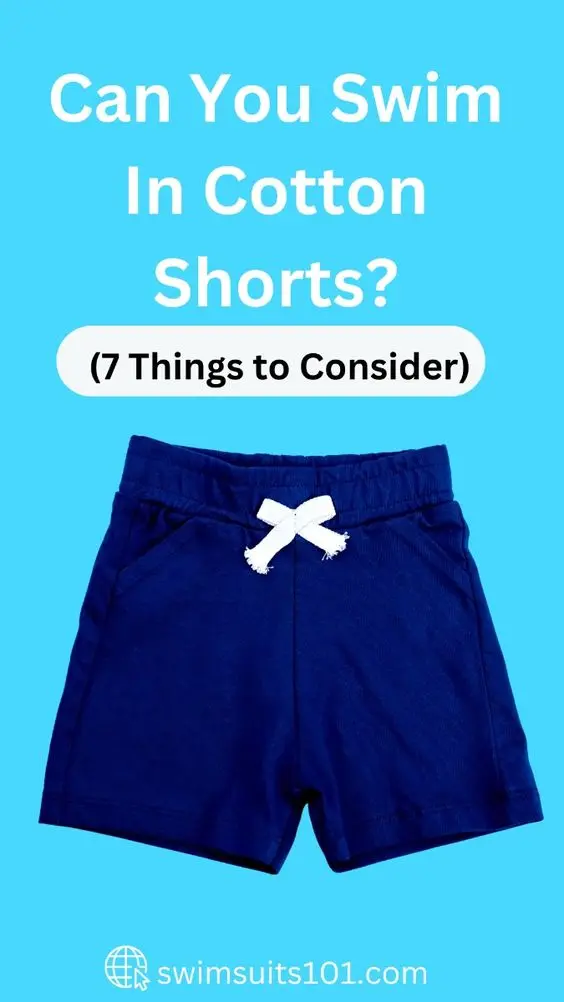
No, you cannot wear cotton shorts in the pool.
While technically you can wear cotton shorts in the pool, as a pro swimmer, I wouldn’t recommend it. Cotton material absorbs water and becomes quite heavy when wet, which could restrict your movements in the water.
Instead, opt for swimwear made from synthetic materials like nylon or polyester, which are specifically designed for swimming activities. These materials are lightweight, durable, and resistant to chlorine and saltwater, enhancing your swimming experience.
Below are several reasons why it is not recommended to swim in your cotton shorts.
Why Can’t You Wear Cotton in a Pool?
Below are 7 reasons why cotton shorts are not the most optimal choice for swimming.
- Cotton is highly absorbent
- When wet, it can rub against your skin, causing chafing and discomfort
- Cotton takes a long time to dry
- The fabric can become transparent when wet
- Chlorine can cause damage to cotton
- Fibers from cotton clothing can clog filters and damage the pool
- Cotton shorts aren’t designed for swimming
1. Cotton is highly absorbent
When submerged in water, your shorts will soak up and retain a lot of it. This can significantly increase the weight of your clothing, making it harder for you to swim and move around in the water. It could potentially even increase the risk of drowning if the weight becomes too much to manage.
2. Chafing and discomfort
When wet, it can rub against your skin, causing chafing and discomfort, especially during prolonged periods of activity. If you’re planning on swimming for an extended time, or plan to engage in water sports, cotton shorts might leave you feeling uncomfortable and sore afterward.
3. Cotton takes a long time to dry
They are not quick dry swim shorts like regular swim shorts. This can be a nuisance post-swim. Wearing wet shorts for an extended period can lead to discomfort, and in some cases, skin irritation or rashes.
4. The fabric can become transparent when wet
This fabric can become transparent when wet. This could potentially result in an embarrassing situation if your shorts become see-through after your swim.
5. Chlorine can cause damage to cotton
The combination of water, chlorine, and sun exposure can cause cotton to deteriorate quickly. Colors can fade, and the fabric can lose its shape over time. This means your cotton shorts might not last as long as swimwear designed for use in the water.
6. Harmful to the pool
Not specific to the swimmer but still important is the fact that fibers from cotton clothing can clog filters and damage the pool. This is why many public pools explicitly state “no cotton” on their rules.
7. Not designed for swimming
Simply put, cotton shorts aren’t designed for swimming. Swimwear is made from materials like nylon or polyester because they’re lightweight, comfortable, quick-drying, and more durable in water.
What Material Shorts Can You Swim In?
While we’ve established that cotton shorts might not be the best for a swim, there are other materials designed specifically to enhance your swimming experience.
1. Nylon shorts
Nylon is a synthetic fabric known for its strength and durability, making it a top choice for swimwear. It’s lightweight, resistant to the damaging effects of chlorine and sun exposure, and dries quickly. However, it’s not very absorbent, so it won’t weigh you down while you’re in the water.
2. Polyester shorts
Like nylon, polyester is durable, lightweight, and resistant to chlorine and UV rays. It’s also quick-drying and retains its shape well, even after many swims. Polyester swimwear is a popular choice among professional swimmers and water sports enthusiasts.
3. Waterproof swimming shorts
The best thing about waterproof swimming shorts is that they don’t absorb water at all. Instead, water beads up and rolls off the fabric, keeping you dry even when you’re in the water. Waterproof shorts can be made of various materials and they often have a special coating or treatment that repels water.
Shorts Material You Should Not Swim In
1. Jean shorts
Jeans are typically made of cotton or a cotton blend, which means they have all the drawbacks of cotton shorts when it comes to swimming. They absorb a lot of water, become heavy and uncomfortable, and take a long time to dry.
2. Linen shorts
While linen is a lightweight and breathable fabric, it’s not suitable for swimming. Linen absorbs a lot of water, takes a long time to dry, and can become quite heavy when wet. Plus, constant exposure to water can weaken the linen fibers, reducing the lifespan of your shorts.
What Swim Shorts Can I Wear? (3 Recommendations)
Having stressed the reasons why one shouldn’t swim in cotton shorts, there are three types of swim shorts you can wear to swim in place of shorts. They are; polyester, nylon, and Lycra.
1. Russell Athletic Men’s Standard Dri-Power Performance Short with Pockets

Look no further than the Russell short for an endless time when hitting the water. The short is a multipurpose short that can be worn to several places which makes it one of the most popular shorts one can find.
It has a sun protection feature and it comes with a pocket for storing phones and other valuable items. It is that stretchy, quick-drying, and quality short you can’t ignore.
2. Champion Men’s 6″ Nylon Warm-Up Shorts

Here is a nylon swim shorts that beats that of cotton shorts. As opposed to the cotton short, the champions men short is a water-resistant short that does not get soaked with water leading to lagging.
It is light weighted, with pockets that are placed at the sides and also at the back of the short.
3. JOJO LEMON Swimming Jammers for Men and Boys

This is the last short on the list. Lycra shorts will take the place of cotton shorts anytime, any day. The Jojo short comes with spandex to give more fitting and durability to it.
The short is chlorine resistant short, it is stretchy with topnotch quality for all its users. This short is a lifesaver from the disadvantages attributed to cotton shorts.
Is cotton good for swimming?
Cotton is not an ideal material for swimming and any cotton attire should not be worn for swimming.
Conclusion on if you can wear cotton in swimming pool
Swimming in cotton shorts isn’t something to be given a shot at. Having carefully listed and stressed the reasons why you can’t swim shorts, it is left for you to decide on which sides you are heading towards.
Would you wish to swim in shorts or a bathing suit? The choice is yours to make. Above are swimming shorts ideal for swimming. Kindly go through the links for more details and reviews.
