
Swimming is an exhilarating experience, a perfect blend of fitness and fun. The swim cap is an integral component of swimming accessories that often garners discussion. However, one important question swimmers and novices ask is, should swim cap over ears?
You may see some products here which has either been used by us or independently selected by (obsessive) editors. As an Amazon associate, I earn from qualifying purchases at no extra cost to you.
Yes, you can partially wear a swim cap over your ears to prevent water from entering them. Well, it also depends on the individual and the occasion too. While some individuals may want to swim without the use of swim caps, others may prefer to hit the water wearing a swim cap over their ears.
In some other cases, the occasion would determine why you should wear a swim cap over your ears this includes your performance in the water as a swimmer.

Do Swim Caps Keep Water Out Of Your Ears?
Yes, swim caps can limit the amount of water that gets into your ears, but they do not create a watertight seal and are not specifically designed to keep water completely out of your ears.
Even when a swim cap is worn over the ears, water can still seep underneath during vigorous activity or due to the natural movement of the cap during a swim. Thus, a swim cap alone may not be sufficient for individuals who are particularly prone to ear infections or other ear-related health issues due to water exposure.
For those needing to keep their ears dry, consider using earplugs specifically designed for swimming. They create a more effective seal against water entering the ear canal. If used in combination with a swim cap covering the ears, it can offer an extra layer of protection.
Why Is It Good To Wear Swim Cap Over Ears?
Wearing a swim cap over your ears offers several advantages for all types of swimmers, whether they are casual or competitive. Let’s break down some of the key reasons why this practice can be beneficial:
1. Protection from water
One of the primary reasons to wear a swim cap over your ears is to keep water out of the ear canal. Excess water in the ears can lead to discomfort, difficulty hearing, and in some cases, ear infections such as swimmer’s ear (otitis externa), a painful condition caused by inflammation, irritation, or infection.
2. Prevents surfer’s ear
Surfer’s Ear (exostosis) is a condition where repeated exposure to cold wind and water causes bone growth in the ear canal, leading to hearing loss. Covering the ears with a swim cap can provide a layer of protection, especially when swimming in cold water.
3. Comfort and hydrodynamics
Having a swim cap over your ears can reduce drag in the water, providing a smoother, more streamlined swimming experience. It can also help to prevent your hair from getting tangled or pulled, making your swim more comfortable.
4. Heat retention
The human body tends to lose significant heat through the head and ears. A swim cap over your ears can help to retain body heat when swimming in colder waters, keeping you warmer and potentially enhancing performance.
5. Noise reduction
Wearing a swim cap over the ears can help to dampen noise, providing a more focused and peaceful swimming experience.
6. Protection for swim equipment
For swimmers who use earplugs or hearing aids, a swim cap worn over the ears can provide an extra layer of protection, helping to keep these devices secure and dry.
Cons of Swim Caps Covering the Ears
Like any piece of equipment or apparel, wearing a swim cap over your ears has its cons. Here are some important considerations to keep in mind:
- Discomfort: Some swimmers might find that a cap over the ears uncomfortable or causes pressure.
- Impaired hearing: A swim cap covering the ears can dampen sounds, which might be problematic in certain scenarios, such as competitive swimming, where auditory cues are important.
- Allergic reactions: Some people may be allergic to the materials used in certain swim caps (like latex), causing discomfort or even allergic reactions.
- Not fully waterproof: It’s important to remember that while swim caps can limit the amount of water that gets into the ears, they are not completely waterproof. Water can still seep underneath, especially during vigorous activity.
- Potential for hair pulling: Depending on the material and fit, swim caps may sometimes pull or tug at hair, which can be uncomfortable.
Best Swim Cap to Cover Ears

1. Firesara Fabric Swim Cap
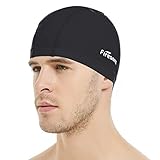
There is so much to love about this swim cap. Is it its elasticity? Or the fact that both genders can wear it? As I said, there is indeed so much to love about this cap. It doesn’t just end there; it lets you wear your long or short hair in it. It’s a great swim cap to behold.
Features
1. Protection
It will help you to keep your hair from being affected negatively by chlorine and from being affected by heavy sunlight when you are swimming. Recall that you need a swim cap to protect your hair and skin.
2. Tight
Wondering if it will pull off? Oh No. It wouldn’t because it is tight, making it elastic enough to stay on the head no matter how long you swim in the water.
Pros
- It dries quickly
- The Firesara fabric swim cap is lightly weighted
- The swim cap is durable and long-lasting
- It makes you comfortable when worn over the ears
- It comes with a UV protection
Cons
- The swim cap is not entirely waterproof.
2. TYR Wrinkle-Free Silicone Cap
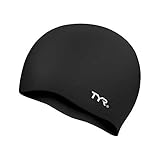
There is no better way to swim than using the TYR swim cap to protect your hair and ears from the water. This swim cap is easily sought after using the amazing features it poses all around.
Features
1. Durable
Trust me; no one loves getting wear that would not stand the test of time in any way. I love getting wears that I know will be durable. The TYR spells durability boldly. It is not like the everyday swim cap that gets worn out after some time. Indeed, it stands out by being durable.
2. Non-Slip Swim Cap
I wouldn’t want anyone to get something that wouldn’t even perform half of what it is expected to. This swim cap does not slip off regardless of how long you are going to have it placed on the head. It stays no matter the water or situation.
Pros
- The TYR swim cap is soft and light weighted
- One amazing feature about this swim cap is that it can be found in diverse colors
- It has a high quality
- It gives you the performance you seek for
- It is elastic
Cons
- Not waterproof
Conclusion – Should Swim Cap Cover Ears
In conclusion, you can wear a swim cap over your ears. And it is optional. You can choose to have it worn or choose not to. But in all, a swim cap helps to protect the hair from chlorine.

The best cap for ear protection is the good old “rubber strap bathing cap.” The key is to find a style that fits well. I use a tuff of lambs wool.about the size of a quarter. Spindle a small part of it and insert it in the ear so it doesn’t move when you put the cap on. The flat rubber caps work best. The wool traps any leakage. Dry it. reuse it over and over. You can hear just fine. No, ladies, they are not ‘dorky!’ Many men and l ladies have a fondness for vintage bathing caps. See Facebook. I’m a senior guy who taught swim classes for 20 years and had horrible ear infections.. This enabled be to continue doing what I loved doing. I haven’t had any ear problems since using these strapped caps. And, NO, I was never teased. I helped many people over come ear problems! I Enjoy the water here in Port St. Lucie, Florida!